
Could Bill Gates and political tussles overshadow AI safety debate in Delhi?

Tech Now
We will do battle with AI chatbots as we did with Grok, says Starmer
Getty Images
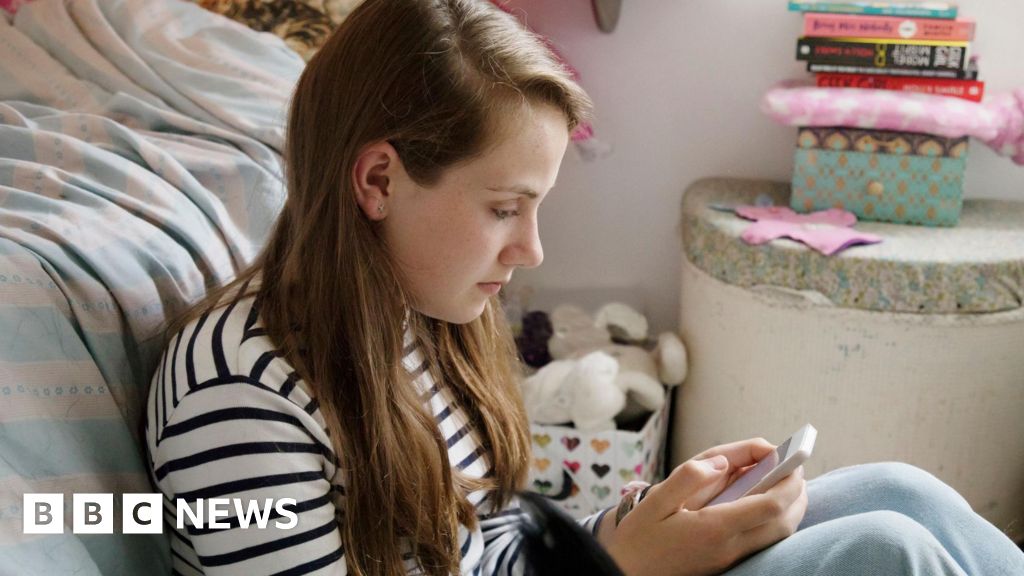
Sir Keir Starmer has pledged to respond more quickly to close loopholes in laws designed to protect children online.
The prime minister said while the government had "won" the "battle" with X – after threatening the platform with action over its AI assistant Grok creating non-consensual sexual deepfakes – it was now time to do the same with "all AI bots".
As well as tightening legislation around chatbots, government proposals also included a measure requiring tech giants to preserve all of the data on a child's phone if they die.
Opponents accused the government of "inaction", and have called for Parliament to be given a vote on the social media ban for children.
Sir Keir said no online platform will get a "free pass" over the issue of children's online safety as he promised to "crack down on the addictive elements of social media".
The main new proposals are:
- Coroners would have to notify Ofcom of the death of every child aged 5-18 so they can ensure tech companies do not delete their data, in case it is relevant to the way they died
- Artificial intelligence (AI) chatbots would be included in the Online Safety Act
- Getting new legislation around technology through much quicker
The government reiterated its plans to launch a public consultation on children's use of social media, seeking opinions on restricting children's access to AI chatbots and limiting infinite scrolling features for children – also known as doomscrolling.
The government has now said it wants to create new legal powers so it can take "immediate action" following the consultation.
Technology Secretary Liz Kendall told the BBC's Today programme while she felt a proper consultation was essential, the government should still be able to act swiftly once it had come to a decision.
"The first time the Online Safety Act was discussed I think was in a green paper in 2017 – that process is too long, because the technology is changing so quickly," she said.
"MPs have a Finance Bill every year with the budget – I think we need to think like that with technology because it is changing so fast."
The Online Safety Act – which became law in 2023 – was written before the release of AI chatbots such as ChatGPT, and the government says it intends to close loopholes in the legislation so the tech is included.
Other measures being considered include preventing children from using virtual private networks (VPNs) to get around age checks, and amending the law so chatbots have to protect users from illegal content.
In an article on the website Substack, Sir Keir wrote: "In the past 20+ years, social media has evolved to become something completely different from the simple, stripped-back pages it was in its conception.
"And in that evolution, it has become something that is quietly harming our children."
The prime minister added he wanted to "crack down on the addictive elements of social media, stop the auto-play, the never-ending scrolling, that keeps our children hooked on their screens for hours, and stop kids getting around age limits.
"And if that means a fight with the big social media companies, then bring it on," he said.
'I never wanted another parent to ever be in my position' – Ellen Roome
There are also plans to change rules on how children's social media data is stored under the Crime and Policing Bill, after the Jools' Law campaign.
In 2022, Ellen Roome's son Jools died aged 14. She believes he was trying an internet challenge which went wrong, but has never been able to access his data to prove it.
Under current rules, a child's data must be requested from tech companies within 12 months of their death by either a coroner or the police.
Outsourcing IT services.will battle chatbots
But bereaved parents say often by the time that happens, this record of what their child has been doing online has already been deleted.
New rules would mean it has to be preserved within five days if it might be relevant to the cause of death, which hopefully means more families will get some answers.
"This going forward will help other bereaved families," Roome said. "What we now need to do is stop the harm happening in the first place. This is really relevant when a child dies, but we need to stop them dying in the first place."
Andy Burrows, chief executive of the Molly Rose Foundation, a UK-based suicide prevention charity, said he strongly welcomed the government's ambition to move quickly but that added the prime minister must go further.
"Sir Keir Starmer should commit to a new Online Safety Act that strengthens regulation and makes clear that product safety and children's wellbeing is the cost of doing business in the UK," he said.
Chris Sherwood, the chief executive of NSPCC, said it was important to put children's voices at the centre of the debate.
"After their insights have been overlooked in discussions so far, their experiences must now help guide the decisions made in the months ahead," he said.
Lord Nash, a Conservative former minister who has been campaigning in the Lords for tighter social media controls for children, welcomed the adoption of Jools' Law by the government.
But, he said to avoid "future tragedies", the "government must raise the age limit to 16 for the most harmful platforms now".
Shadow education secretary Laura Trott described the consultation announcement as "inaction", and said Britain was "lagging behind. "I am clear that we should stop under-16s accessing these platforms," she said.
Liberal Democrat spokeswoman Munira Wilson, too, accused the government of continuing to "kick the can down the road" and called for a "much clearer, firm timeline" on when action will be taken.
Technology Secretary Liz Kendall said the government was "determined to give children the childhood they deserve and to prepare them for the future at time of rapid technological change" and would "not wait" to take the action families needed.
Additional reporting by Laura Cress.
No 10 welcomes reports X is addressing Grok deepfakes
UK consulting on bringing in social media ban for under 16s
What screen time does to children's brains is more complicated than it seems
Original aticle here: BBC